
For many of us, the thing that may come to define Montana’s 2026 primary elections wasn’t anything a candidate said, but the deluge of mailers and ads blasted out by PACs on both sides of the aisle.
One of the groups responsible for those ads was AFP-Montana, the state chapter of the powerful and notorious national organization founded by Charles and David Koch over twenty years ago. In a nutshell, AFP advocates for free markets, deregulation and generally limiting the scope of government.
This year, AFP-Montana championed a slate of conservative candidates running against moderate Republican incumbents, many of whom had voted with Senate Democrats to pass marquee bills during the 2025 Legislature: Medicaid expansion, property tax reform and the state budget.
AFP-Montana’s efforts certainly bore some fruit in June’s elections, but a handful of moderates still won their primaries. Some of them, like Reps. David Bedey, speaking in BSCH, and George Nikolakakos — who recently burned a letter from AFP in his BBQ grill in a Facebook video — have accused the organization and other PACs of lying about them in campaign ads.
The organization’s engagement in the primaries highlighted a question that sits at the heart of Montana politics today: is there room for “independent-minded” or moderate Republicans in the state GOP?
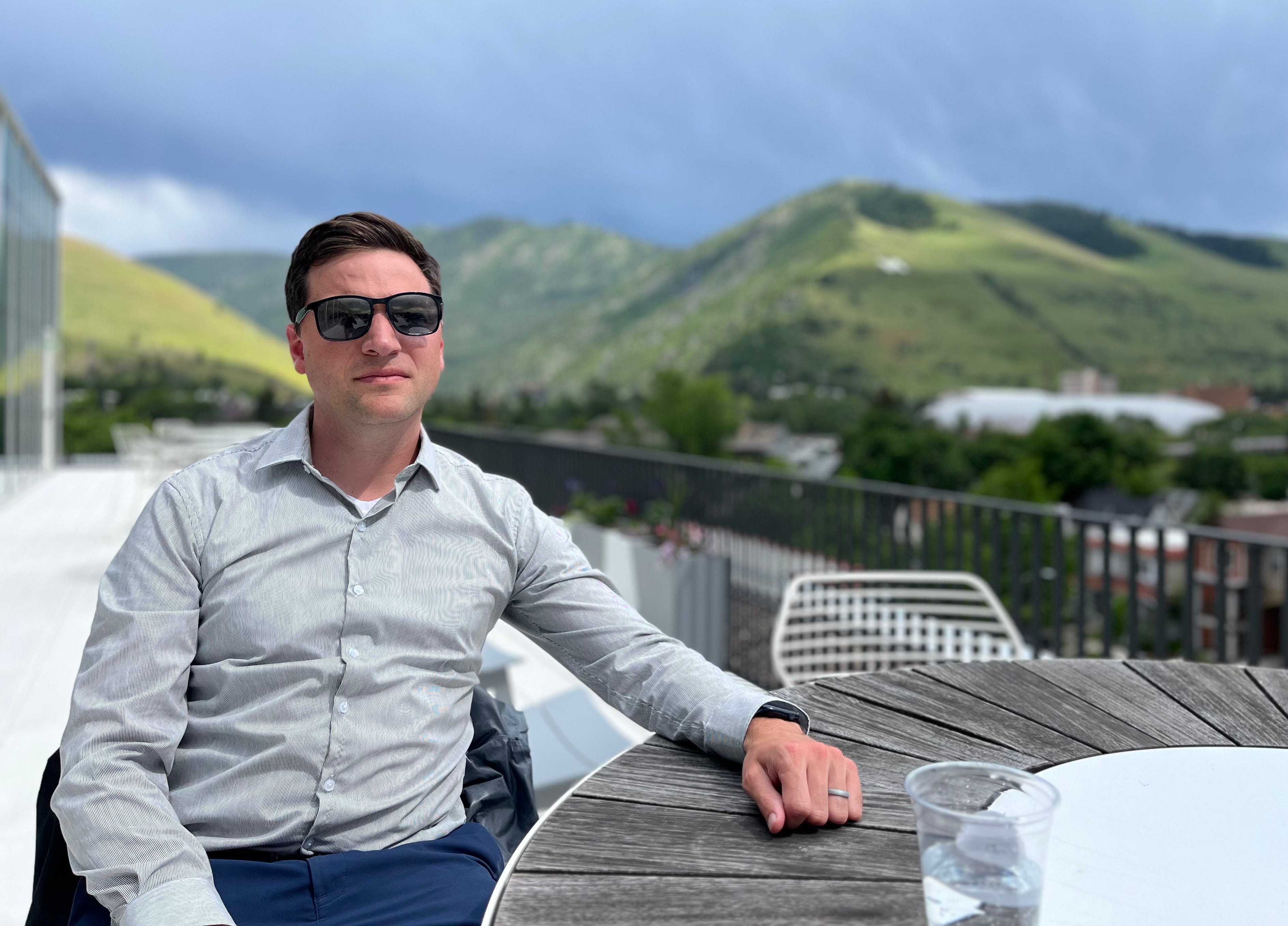
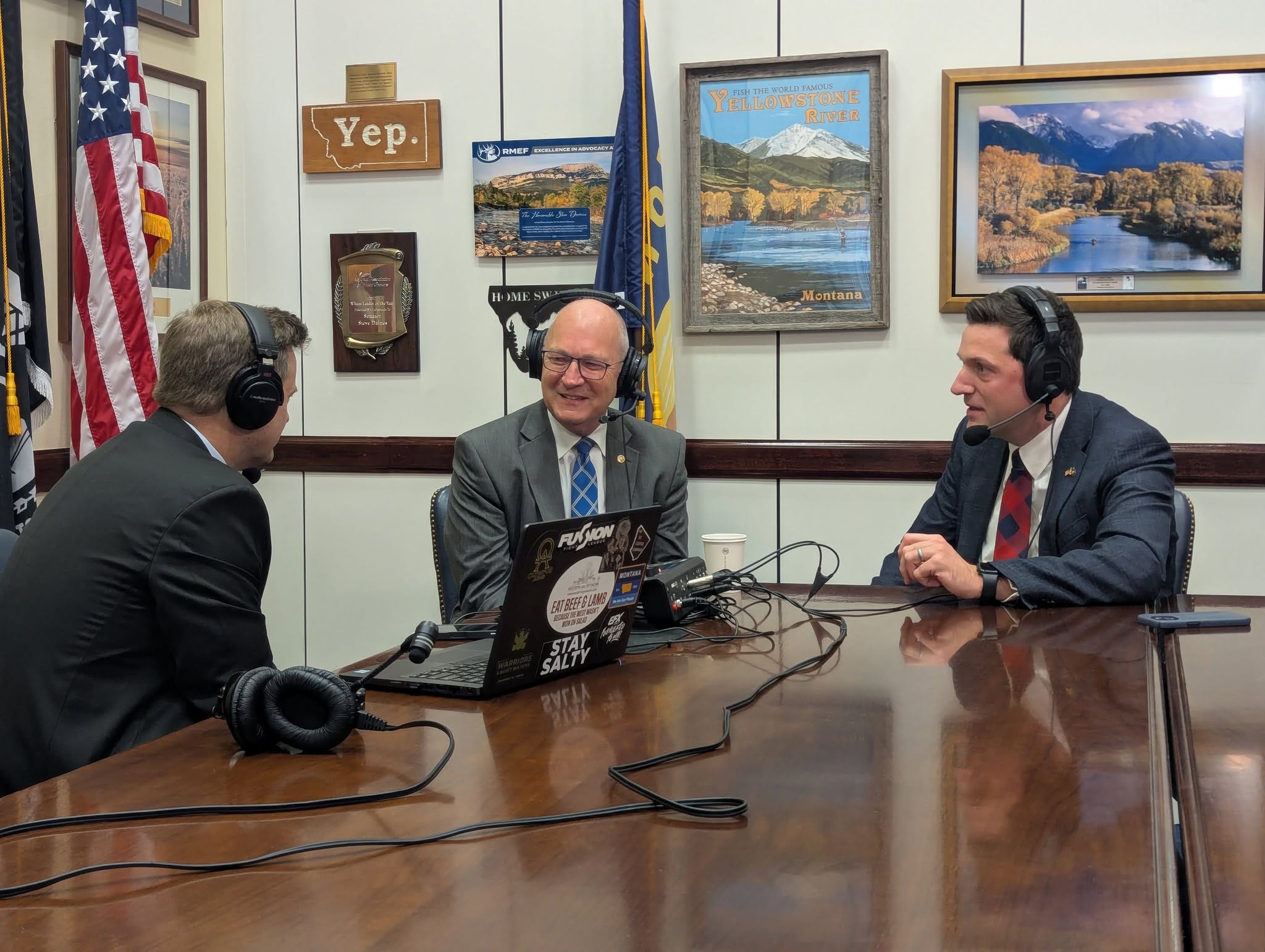
To unpack the state of affairs, I met up with Jesse Ramos, a former Missoula city council member who now serves as AFP’s State Director, on a moody afternoon at the Missoula Public Library. Speaking in a personal capacity, Jesse and I got into the organization’s priorities, the results of the primaries and what he makes of the matchup between Sam Forstag and Aaron Flint.
Readers note: This interview encompasses two conversations; one conducted before the elections and one after. The content from the first conversation comprises the first half of the piece, the second conversation comprises the second half. As always, this piece has been edited for length and clarity.
Max: You recently wrote an op-ed in the NY Post that argued that lots of Independent candidates are effectively Democrats in disguise. I generally agree with your take on Seth Bodnar in the article, but the thing that gave me pause was your criticism of “independent-minded” Republicans in Montana; it was hard to not read it as something like a purity test.
Jesse Ramos: There’s no question that AFP is very [pro] small government. I mean, I think we’re the most principled conservative group in the country. We’ve supported things like criminal justice reform. We’ve opposed things like tariffs. We’ve opposed President Trump in the Republican primary because we believe that he was growing the size and scope of government.
And I think it’s safe to say that when we support candidates, we believe that they’re going to shrink the size and scope of government. On the other side, [there are] super PACs that are supporting Democrats and quote unquote “independents” across the country, but then also supporting these so-called independent-minded Republicans. But even candidates that we oppose, we love working with to get good policies through.
Are you talking about the Fireweed connected candidates?
I’m talking more about the WayBack PAC. They’ve given $250,000 to Llew Jones’ PAC, Conservatives4Montana.
I’m not picking on the donors. I’m just saying, does it pass the smell test of “Would I be donating to a Democrat candidate as a small government guy if I thought that they were going to be completely blowing up the size and scope of government?”
No. But would I, in Missoula, for instance, give money to somebody that said they were a Democrat but were actually a Republican so they could get elected? Absolutely, I would do that. I mean, I think we’ve got some sheriff candidates and others here in Missoula that might be a little bit more right of center than they claim to be.
These are not small issues that AFP is concerned about. We’re not talking about a couple tenths of a percentage of a tax rate. We’re not talking about zoning for affordable housing. We’re talking about the budget, which is the most important thing that the state legislature votes on. We’re also talking about healthcare. [Even having Medicare work requirements in place] does not change the ultimate ideological difference about who is best positioned to provide healthcare: Is it the private sector? Is it the government sector? And at the end of the day, work requirements or not, does it incentivize poverty?
It’s really a corporate welfare argument in my mind, and if anybody knows anything about me, they know that I hate corporate welfare.
The other big one, the property tax [reform], completely restructuring the entire property tax system of the state with the governing minority, that is affecting businesses; it’s affecting folks that own a second home, whether they’re in state or out of state; it’s affecting people that want to buy a home. [Moderate lawmakers] all of a sudden say, “Whoa, whoa, whoa, whoa, whoa. I’m just independent-minded.”
This is not a purity test. It’s like, “No, you just passed a property tax bill that is more progressive than anything California has even come up with.”
Is there a race or two in particular that AFP is focused on this year?
Llew Jones definitely comes to mind. You gotta tip your hat to the guy; he’s been the shadow governor for many years now. He’s the most powerful man in Helena. His principles always have seemed, at least from the outside, to be very malleable; it’s all been about power and governing control.
I don’t know if you got to read the piece on him in the Montana Free Press recently. But he’ll straight up say he will sell things off to get things passed, whether it’s a swimming pool, or whether it’s taxpayer-funded childcare.
But isn’t that just the reality of politics? I’m not crazy about that either, but it doesn’t strike me as something exceptional to him.
Yeah, it doesn’t really shock the system. I think what really shocks the system is that he’s negotiating against his quote-unquote “own side” and he’s going against principles that Montanans believe in. I think Montanans would generally agree that they want a smaller size and scope of government, and I think that’s reflected in poll after poll.
And so I think Llew does certain things to grow government in kind of a back alley way. To your point, that is not uncommon, but that doesn’t mean that we have to like it. And we call it out when it’s at the federal level with omnibuses. We don’t want these huge pork barrel packages.
Again, Llew is the key architect of that. I think that it’s time that voters at least know what he’s up to.
In the ‘25 session, those bills that you mentioned were all signed by the governor, right? So how does he fit into this equation?
That’s a very good question. The governor is in his last term, and at the end of the day, I think he ultimately can’t control what comes out of Helena.
I think the job of any of the candidates is ultimately to put better policies on the governor’s desk in his last term that actually shrink the size of government.
But was there anything stopping him from vetoing them?
That is a good question. I wish he would’ve.
So where does the buck stop?
I think the reason why we are targeting Mr. Jones is because the buck does ultimately stop with him. Those [bills] were all his babies that he helped usher through.
The governor line-item vetoed a few things. I wish he would’ve line-item vetoed a ton more out.
It’s been about a week since the primaries. What were your takeaways?
That was a fantastic night. There was a total of eight incumbents that were unseated. Six of them were folks that, I guess you would say, were part of the unaligned majority in the Legislature.
AFP directly engaged in four of those races to help unseat unaligned legislators: John Fitzpatrick was defeated. Shelley Vance was defeated. Linda Rexton was one and Ken Walsh was the other. Another person that we just didn’t have the bandwidth to engage with was Curtis Cochran. Ed Buttrey was another one that was held accountable. We didn’t engage directly in those two races by any stretch, but we were not sad to see them go, to say the least.
Everybody thinks that all AFP does is exist to make Llew Jones’ life a living hell. But in reality, I don’t want to have to spend time on this because I have so many other things that I need to do for my job [in order for the] legislature to do a good job upholding the principles of conservatism.
But unfortunately, when they fumbled the football the way that they did, I had no choice but to expend tremendous bandwidth on races that I wish I didn’t have to.
And when you have something like that, which is arguably, I think one of the worst sessions that any red state has had, at least that I’m aware of, in terms of growing government, it’s not good. And I would have liked nothing better than to have more bandwidth for federal races and federal policy, because Lord knows that there’s a lot of really important things that the federal government is trying to get done right now in terms of permitting reform, in terms of unleashing American energy abundance.
And again, if a Democrat comes along and supports school choice, they support a flat tax, they support actually clamping down on overspending at the local government level, they support regulatory reform, they support free speech, we support them just like anybody else.

What do you attribute Llew Jones’ win to?
I mean, honestly, it’s incumbency. There’s a tremendous amount of built-in systemic advantages that go to somebody that’s been entrenched in politics for decades. Llew has built-in name ID. We all know there’s a tremendous cost and value to name ID.
It’s expensive to purchase ads. It’s expensive to get your name in the newspaper. I mean, it’s expensive to have mail pieces sent out.
If we were to try and recreate that same name ID for somebody like a Zack Wirth, that’s probably well over a million dollars to try and match that at the end of the day. And then there’s also obviously the fact that [Jones] had a huge, massive fundraising advantage because of folks that he’s done favors for, lobbyists, all kinds of that type of stuff throughout the years that he’s built that network over decades.
And ultimately, he squeaked by. That’s true. Congratulations to Llew for squeaking by. But I don’t think anybody thought it was going to be that close. I think everybody always assumed that Mr. Jones was inevitable; that he could not be beaten. I think it showed that he absolutely could be.
So I hope that Mr. Jones can take that as a sign. I think that in America, we have too many politicians that squeak by with tiny little margins of victory and think they have this gigantic mandate, when really it’s like, he won, but please just govern normally. We just want somebody that’s going to go to Helena and represent our interests.
So I think that’s the message that I hope Mr. Jones takes. But maybe this is a little bit of time for reflection.
And I look forward to working with Mr. Jones on areas in which we have shared interests, or at least what he alleges are shared interests. So with flat income tax, true property tax reform, occupational licensure reform, school choice, he was touting that a lot on the campaign trail. So I think that I’d love to work with him on that sort of stuff. I think I’m still on the MARA committee — the Modernization & Risk Analysis Committee. That was his baby. He appointed me to it before this all happened with the elections, and I look forward to continuing to serve on that.
I was curious for your take on the outcome of the congressional primary for the western district.
Well, I need to state for the record that America for Prosperity Action has not taken a position in this race. And I’m speaking as a private citizen.
Aaron Flint has been a longtime personal friend of mine. I think he’s a great man. I think he will make an excellent congressman. And I look forward to personally working with him in any capacity to get there.
I also look forward to working with him as State Director of AFP should he get into Congress. I think that it’s long past time that Montana was represented by somebody with deep roots in the community. Honestly I don’t know if there’s a single person in Montana that’s more connected with the issues of the grassroots than Aaron Flint.
I mean, he spent 20 years talking to people on every corner of the state. He did a ton of events with AFP Montana in 2024, really highlighting the issues of government overreach.
On the Democrats’ [side], I was surprised, honestly, to a certain extent that Mr. Busse didn’t win. But at the same time, I think Sam is running a campaign that just shows that people are tired of the status quo.
I mean, I probably disagree with Sam on nearly every issue, but people are sick and tired of electing people and nothing changing. And I think that’s what his election represents, that people are tired of politicians saying one thing and doing another and upholding the status quo. And I think that both Aaron and Mr. Forstag represent kind of an affront to the status quo.
Interesting.
Big time. Oh, and I think on the Senate side, again, speaking [in a personal capacity], we can make a bet, maybe, and you can buy me lunch. I can almost guarantee that Alani Bankhead will drop out and her name will not appear on the ballot, and she will endorse Sam Bodnar.
Why do you believe that?
Again, my personal opinion, it’s my gut feeling, and primarily because of the fact that you had an outside PAC that is, to say the least, investing close to, I haven’t checked the finance reports, at least half a million dollars into a candidate who had raised $12,000 is all in a Democratic primary with an Independent on the ticket, in which nobody thought that the Independent or the Democrat had a chance with both of them in the race.
So why would a progressive vet PAC spend, we’ll call it, I’m guessing around a million dollars to prop up a candidate that everybody thinks is going to lose, unless they don’t think that she’s going to lose. [Note: According to Montana Free Press, Bankhead had about $23,000 cash on hand, and the Progressive Vet PAC spent over $3 million on the race.]
So again, that’s just my thoughts. Call it a crazy conspiracy, that’s my personal opinion, but we will see.
I’d love to have lunch, but I’m not going to take your bet.
I wouldn’t either.

You’re obviously not a proxy for Aaron’s campaign. But as someone who is rooting for him to win, do you see Sam as a harder opponent to beat than Busse?
I’ve actually thought long and hard about this, because I don’t really know…and by long and hard for my ADD self, it’s probably like three minutes. But I think conventional wisdom states that the AOC, Bernie Sanders angle is going to hurt him here in Montana.
I honestly think that Mr. Cleveland probably would have been the most actually electable gentleman at the top of the ticket.
So, I think that in terms of, as someone that wants Aaron to win, I think that there are pros and cons to Forstag and to Busse. I think that the benefit of Forstag, and I’m not saying this as an insult, because I’m a young guy too, [but] Mr. Busse was a lot more seasoned.
He ran Kimber, he ran a lot of different things. I think that that experience would have probably helped him in what’s going to be a really hard-fought race. Forstag hasn’t run for anything before.
I think both of them are preferable for sure to Cleveland. Cleveland would have been a tough opponent.
I am inclined to agree. One other question about Aaron’s campaign: I really struggle to see a lot of substance, just a lot of extremely inflammatory rhetoric from him. I’m genuinely curious, what’s an issue or two that really resonates with you that he is championing?
Yeah, I think that’s a great question. He and I have always shared a great passion for unleashing our natural resource economy here in Montana.
I mean, I grew up in Libby, Montana. Aaron Flint and I spent a lot of time together and spent a lot of time on the radio. I think really shining a spotlight on small towns like the one that I grew up in, and how they’ve really become decimated by bad policies coming out of Washington, D.C. It’s a bipartisan thing, too. It’s not all Democrat policies, but a lot of bad policies that have really made it so.
And a lot of that is because the natural resources jobs like mining, like logging, like energy production, they pay back the equivalent today of $90,000 to $100,000 a year. And we have been forced over the last, I don’t know, call it 15, 20 years into the tourist economy, where essentially we’re being asked to be the servants of these rich people coming in from out of state, where the average wage in today’s dollars is $30,000 to $50,000. You can’t afford to raise a family on $30,000 to $50,000 a year.
These breadwinner jobs that have supported entire towns and communities have been regulated out of existence. And that’s something that Aaron, who’s come up to Libby with me, he saw when we did a Bidenomics tour up there in 2024 and went to this kind of budget grocery store called Empire Foods.
A lot of folks that I grew up with, parents and different people lined up around the corner. There was probably 150 of them lined up, on very short notice, to get a $35 gift card that AFP was handing out to give them relief from inflation, because they couldn’t afford that. And that was just so tragic to me, because the town I grew up in was a thriving town, where a kid could graduate from high school on a Friday, lace up his boots on Monday, and make more money than his teachers.
He could buy a house for his family. His wife could stay at home and raise the kids. They could have a nice middle-class lifestyle.
You can’t do that anymore in a lot of parts of Montana. And Aaron gets that. And Aaron has fought on the radio and side by side, and actually wants to help those folks achieve the American dream once again.
AFP is running an ad supporting Kurt Alme for US Senate. The ad says that he’s the right candidate to help Montanans on the affordability front.
Of course, inflation is a complex topics. And I know that Mr. Alme was responsible for cutting income tax when he was the state Budget Director. But at the same time, I feel like a significant amount of the inflation we’re seeing is tied up in Republican-led federal policy and what’s going on in the Middle East. With all of that in mind, what is the pitch that he, as a representative of the Republican Party in the Senate, would be able to help Montana families with this affordability crisis?
We like when people buck the party. And when it comes to shrinking the size and scope of government, Mr. Alme, I believe, at the end of the day, has definitely shown his ability to be an independent thinker, to have an independent thought process. He’s never been in an elected office, but as a [US attorney], he constantly had to make independent judgments. I’ve heard a lot of criticism from him from both the left and the right about his decisions.
And so, again, we hope that leaders, whether it’s in Helena or whether it’s in Washington, DC, that they buck the party establishment when they need to shrink the size and scope of government, when they need to change the status quo. We believe that Mr. Alme will do that when needed. We will talk to him, and hopefully, when he’s over there, he will be able to uphold policies that change the status quo.
I think AFP has come out with policy statements over the last several months that do lay some of the explanation for the cost increase on tariffs, for instance, or the war in Iran. But at the end of the day, there’s a lot of systemic issues. And what is the alternative? What is Mr. Bodnar’s plan to reduce costs? Is Mr. Bodnar’s plan to embrace a free market approach where he eliminates tariffs, gets us out of Iran, lowers the spending at the federal government level, and ultimately cuts overspending? Or is he just going to double down and do more spending just under a different banner?
That’s kind of question that we have for Mr. Bodnar.
And again, [Alme] is a fiscal conservative. He understands at the end of the day that individuals know how to spend their money better than the government does. And so we believe he will do that.
And he has a track record to prove it. And again, his independent streak for doing the right thing is solid as a [US attorney].
[Correction: An earlier version of this interview described Mr. Alme as a judge, not a US attorney.]
Before we wrap up, you know, we started this chat in the Missoula Public Library, which you could argue represents an expansion of government.
What do you think about a publicly invested project like the library and, like, how do you think it should be funded?
Speaking personally, as Jesse Ramos, why do you think I voted against the public libraries? For one simple reason, and it’s because I don’t feel comfortable making spending decisions for somebody else. The public library is really nice. I’m paying for it out of my taxes. And here’s the thing: I’m blessed, very blessed that I can afford this.
[The old] Missoula public library, okay, it wasn’t super fancy. It was dated. Maybe we could have looked at just renovating that instead of building this Taj Mahal that signals that, hey, everybody here in Missoula is thriving and everybody here is rich, because this is what a rich city does. I think it’s one of the fanciest libraries in the United States.
But for the people that are struggling, and that’s kind of a slap in the face to build this Taj Mahal with their tax dollars when they can barely afford to pay the rent.
Good article Max
It's kinda crazy that Jesse R. is just sitting in Missoula espousing smaller government and anti-corporate welfare, while apparently not doing a thing to recruit and train fiscal conservatives to run for local government in his own backyard. Missoula hands out the biggest public subsidies to private business interests in the entire state. Yet, most city council seats go unchallenged, from a fiscal conservative angle.